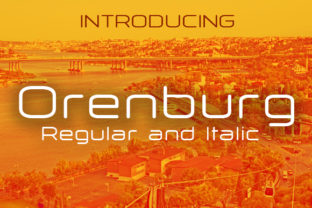
Orenburg: A Versatile Display Font
Orenburg is a striking display font that offers both regular and italic styles, making it a powerful choice for visual projects. Its bold and elegant design makes it ideal for t-shirts, posters, flyers, and other printed materials. Whether you're designing for personal or commercial use, Orenburg adds a unique touch that captures attention.
What Makes Orenburg Stand Out?
Orenburg combines clarity with creativity, offering a clean yet distinctive look that works well in a variety of contexts. The font’s structure allows it to maintain readability even at larger sizes, which is essential for signage, banners, and promotional materials. Its versatility means it can be used in both modern and traditional designs, depending on how it's applied.
For designers, the font provides a strong visual identity that can elevate a project’s overall aesthetic. For businesses, it can help create a memorable brand presence. For hobbyists, it offers an accessible way to add a professional flair to handmade items or digital art.
Why Different Audiences Care About Orenburg
The value of Orenburg varies depending on who is using it. Beginners may appreciate its ease of use and the confidence it brings to their designs. Experienced users might look for its flexibility and how it integrates into existing workflows. Creators and professionals often consider how a font enhances their message or brand.
For educators, Orenburg could be a tool for teaching typography or design principles. Business owners might see it as a way to differentiate their products or marketing materials. Consumers looking for custom designs may find it useful for personal projects or small-scale print jobs.
How Different Users Might Approach Orenburg
Beginners might start by experimenting with Orenburg in simple projects like greeting cards or social media graphics. They may focus on how the font looks in different sizes and colors, learning how to balance style with legibility. For them, the font’s availability in two variants—regular and italic—offers a starting point for exploring typographic diversity.
Experienced designers might use Orenburg in more complex layouts, such as magazine covers or packaging designs. They could evaluate its performance in different mediums, from digital screens to physical prints. Their focus would likely be on how the font complements other design elements and supports the intended message.
Entrepreneurs and small business owners might use Orenburg for branding purposes, such as logos or website headers. They could assess its cost-effectiveness, especially if they’re working within a tight budget. For them, the font’s ability to make a strong visual impact without requiring advanced design skills is a key advantage.
Practical Uses Across Industries
In the world of marketing, Orenburg could be used for eye-catching headlines or promotional banners. Marketers might prioritize how quickly they can implement the font into campaigns and how it performs across different platforms. For them, speed and consistency are important factors.
Bloggers and content creators might use Orenburg for titles or section headers on their websites. They could focus on how the font enhances readability and user engagement. For them, the font’s ability to stand out while remaining easy to read is crucial.
Freelancers and independent artists might incorporate Orenburg into their portfolios or personal projects. They could explore how the font reflects their creative style and helps them stand out in a competitive market. For them, uniqueness and artistic expression are key priorities.
Considering Cost and Quality
When evaluating Orenburg, users should consider both cost and quality. While some fonts come with high price tags, Orenburg might offer a balance between affordability and visual appeal. For those on a budget, this could be a deciding factor.
Quality is also important, especially for commercial use. Users should check whether the font licenses allow for broad application, such as in print or digital formats. For professionals, ensuring that the font meets industry standards is essential for maintaining credibility.
Long-Term Usefulness and Learning Value
Orenburg could have long-term value for users who want to build a consistent visual identity. For example, a designer who regularly uses the font in client projects might find it easier to maintain a cohesive style across multiple pieces. This can save time and improve efficiency over time.
For learners, Orenburg can serve as a practical example of how typography influences design. Students studying graphic design or branding might analyze how the font works in different contexts, gaining insights into typographic choices and their impact on communication.
Deciding If Orenburg Is Right for You
To determine if Orenburg suits your needs, consider what you hope to achieve with your project. Are you looking for a bold statement? A clean, professional look? Or something that balances both? Orenburg’s dual styles offer flexibility, allowing users to choose the right variant for their purpose.
If you’re unsure, try experimenting with the font in a few different scenarios. Test it on paper, screen, or in a mock-up to see how it performs. This hands-on approach can help you understand its strengths and limitations better than reading about them.
Ultimately, Orenburg is a versatile option that can enhance a wide range of projects. Whether you're a beginner exploring design or a professional seeking a reliable font, it’s worth considering for its visual impact and adaptability.