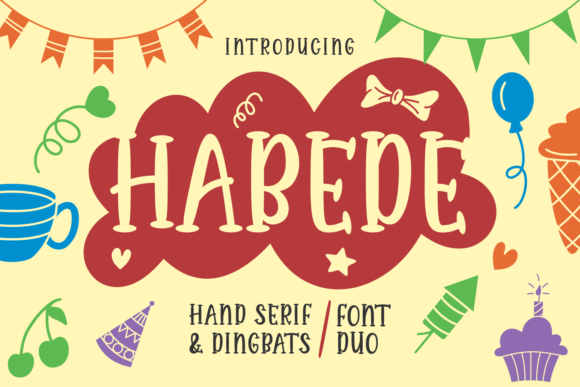
Habede: A Playful, Legible Font for Creative Projects
For designers and creators seeking a font that balances personality with readability, Habede offers a compelling option. This font duo combines a hand-written serif with a bonus doodle style, making it ideal for projects where a personal touch is desired without sacrificing clarity. Whether you're designing invitations, brochures, or digital content, Habede provides a versatile solution that stands out while remaining functional.
What Makes Habede Unique?
Habede consists of two typefaces: a primary serif font and a secondary doodle variant. The serif design features subtle irregularities that mimic natural handwriting, giving it a warm, approachable feel. The doodle font adds an extra layer of creativity, allowing for more expressive use in headings, logos, or decorative elements. Together, they offer a range of visual possibilities while maintaining a cohesive aesthetic.
The playful nature of Habede sets it apart from more rigid typefaces. It avoids the overly casual or chaotic look that some handwritten fonts can have, instead striking a balance between informality and professionalism. This makes it particularly useful for projects that require a friendly tone but still need to appear polished.
Key Characteristics and Strengths
One of the standout qualities of Habede is its legibility. Despite its hand-crafted appearance, the font remains easy to read even at smaller sizes. This is crucial for body text in printed materials like booklets, menus, or signage. The consistent stroke widths and clear letterforms ensure that the font doesn’t become distracting or hard to follow.
Another strength is its adaptability. The serif version works well in both digital and print formats, while the doodle font is best suited for short phrases or visual accents. This flexibility allows users to apply Habede in a variety of contexts without compromising the overall design integrity.
Consistency across different weights and styles is also important. Habede maintains a uniform look across its variants, which helps in creating a unified visual identity. This is especially valuable for branding efforts or multi-page documents where cohesion is key.
Real-World Applications
Invitations are one of the most common uses for Habede. Its friendly yet professional appearance makes it suitable for weddings, events, or personal notes. The font’s readability ensures that details like dates, locations, and RSVP information remain clear, even when styled creatively.
Booklet designs also benefit from Habede’s versatility. Whether it's a travel guide, a product catalog, or an educational resource, the font adds a human element that can make the content feel more engaging. The doodle variant can be used for headings or captions, adding a touch of whimsy without overwhelming the reader.
In digital environments, Habede can enhance web copy, social media posts, or email newsletters. Its handcrafted look gives a sense of authenticity that can differentiate a brand or message from more generic, machine-generated typography.
Quality and Usability
Habede is designed with attention to detail, ensuring that each character is well-proportioned and visually harmonious. The font includes a full set of glyphs, supporting multiple languages and special characters, which is essential for international projects or diverse audiences.
Usability is another strong point. The font is available in standard formats, making it easy to integrate into design software like Adobe Illustrator, InDesign, or Figma. Its file size is manageable, allowing for smooth performance without unnecessary bloat.
Reliability is important for any typeface, and Habede delivers. It performs consistently across different platforms and devices, ensuring that the intended design remains intact regardless of where it’s viewed or printed.
Who Benefits Most from Habede?
Professionals in creative fields—such as graphic designers, marketers, and publishers—will find value in Habede’s unique style. It’s particularly useful for those who want to add a personal touch to their work without sacrificing readability or professionalism.
Entrepreneurs and small business owners may also appreciate Habede for branding or promotional materials. Its playful yet refined look can help establish a memorable identity that resonates with target audiences.
Educators and content creators might use Habede to make learning materials or presentations more engaging. The font’s approachable nature can help reduce the intimidation factor of complex information, making it more accessible to learners of all ages.
Practical Considerations
While Habede is highly versatile, it’s important to consider the context in which it will be used. The doodle variant, for example, may not be appropriate for formal documents or large blocks of text. It’s best reserved for short, impactful statements where visual interest is desired.
Users should also test the font in different sizes and settings to ensure it meets their specific needs. What works well for a headline may not be ideal for body text, so careful consideration of layout and hierarchy is recommended.
Finally, licensing terms should be reviewed before using Habede in commercial projects. Understanding the scope of use ensures compliance and avoids potential legal issues down the line.
Final Thoughts
Habede offers a refreshing alternative to more conventional typefaces, combining creativity with practicality. Its hand-written charm and legibility make it a valuable tool for a wide range of design applications. For those looking to add a personal, engaging touch to their work, Habede is worth exploring. Whether you’re designing for print, digital, or a hybrid approach, this font duo provides a reliable and expressive solution that can elevate your projects.